Shelving System: Types, Features, Specifications & Buying Guide
A shelving system is a structured storage solution built from frames, shelves, and support components, designed to organize, protect, and provide easy access to stored goods
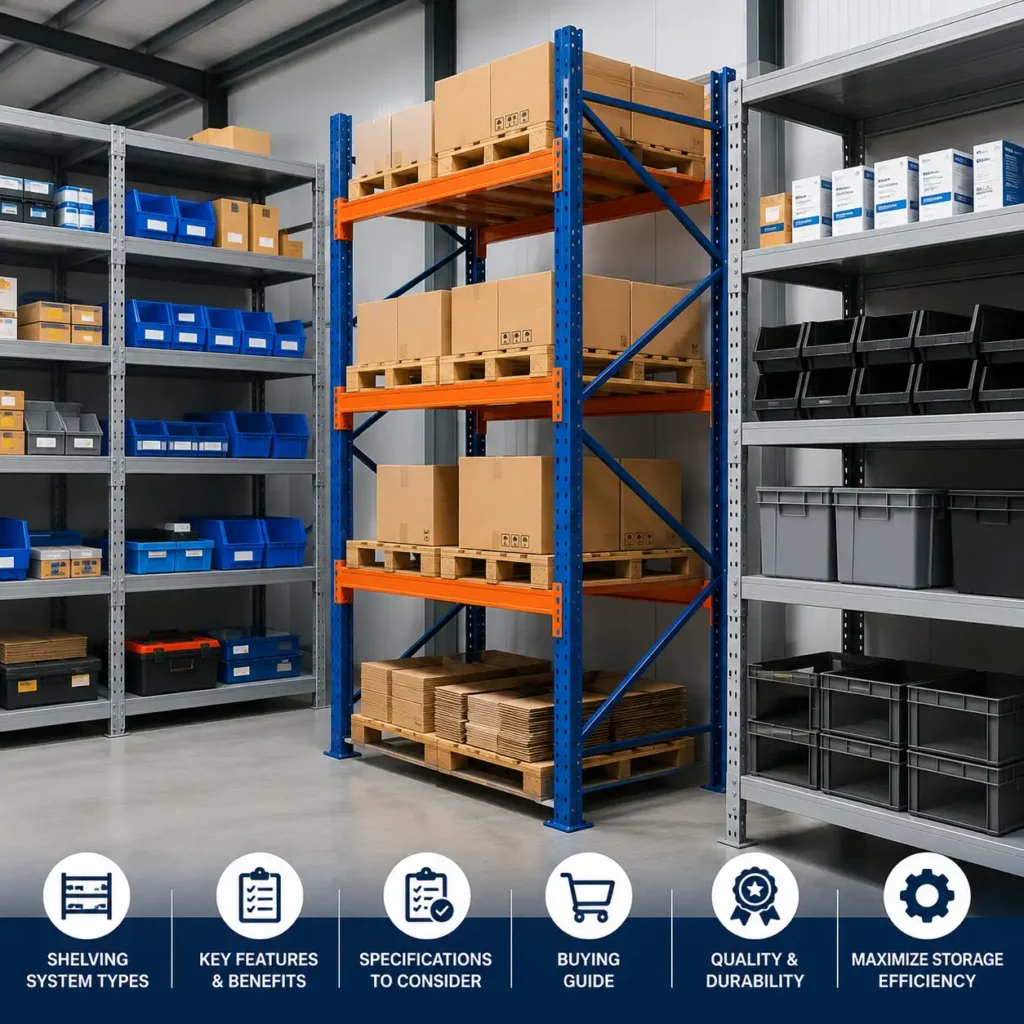
It’s one of the most widely used pieces of storage equipment across warehouses, retail stores, offices, pharmacies, libraries, and industrial facilities — and as businesses grow, the demand for scalable, durable shelving solutions keeps increasing.
Unlike a single fixed unit, a modern shelving system is engineered to be configured, adjusted, and expanded based on the type of goods being stored, the available floor space, and how frequently items need to be accessed. This guide covers every major type of shelving system, the components and materials involved, key specifications to check, and how to choose the right solution for your business.
What Is a Shelving System?
A shelving system is a modular storage structure typically made up of upright frames, horizontal shelves or decking, and connecting or bracing components. Depending on the design, a shelving system can hold anything from lightweight office files and retail products to heavy industrial equipment and palletized goods.
The core purpose of any shelving system is the same regardless of industry: maximize vertical storage space, keep inventory organized, and allow fast, safe access to stored items. A well-planned storage shelving system also plays a direct role in workplace safety, since poorly designed or overloaded shelving is a common cause of warehouse and retail accidents.
Core Components of a Shelving System
Most shelving systems, regardless of type, share a similar structural foundation:
- Upright frames or posts – vertical supports that carry the structural load
- Shelves or decking panels – horizontal surfaces where goods are placed (solid, wire mesh, or particle board depending on the system)
- Support beams or shelf clips – connect shelves to the frame and determine adjustability
- Bracing – diagonal or cross supports that add rigidity and stability
- Baseplates or levelling feet – stabilize the unit on the floor
- Connector or boltless locking systems – used in boltless shelving for tool-free assembly
The quality of these components — particularly steel gauge, coating, and shelf material — determines the load capacity, durability, and lifespan of a shelving system.
Types of Shelving Systems
Industrial Shelving Systems
An industrial shelving system is designed for heavy-duty environments where strength and durability are non-negotiable. Built with reinforced steel frames, these systems are common in manufacturing plants, production facilities, and logistics centers, where they’re used to store tools, spare parts, raw materials, and semi-finished goods. Their rugged construction is built to withstand constant use, heavier loads, and rougher handling than typical commercial shelving.
Commercial Shelving Systems
Warehouse Shelving Systems
Storage Shelving Systems
Metal & Steel Shelving Systems
Heavy Duty & Boltless Shelving Systems
Specialized Shelving Solutions by Industry
Beyond general categories, many shelving systems are purpose-built for specific industries:

Retail Shelving Systems
Designed to enhance product visibility and customer browsing experience, with easy-restock configurations for fast-moving stores.

Pharmacy Shelving Systems
Built for organized, safe medicine storage that supports quick access and helps meet regulatory compliance requirements.

Library & Archive Shelving Systems
Typically compact or mobile shelving systems that store large volumes of books and documents while conserving floor space.

Office & Laboratory Shelving Systems
Office shelving keeps files and supplies organized, while laboratory shelving is engineered for the safe storage of sensitive equipment, samples, and chemicals.

Automotive & Parts Shelving Systems
Used in garages, workshops, and parts warehouses to keep tools, components, and inventory organized and easy to locate.
Wall-Mounted & Modular Shelving Options
Wall-Mounted Shelving
Modular Shelving
Custom and Modular Shelving Systems
Materials Used in Shelving Systems
The material and finish of a shelving system directly affects its strength, appearance, and lifespan:

Cold-rolled or hot-rolled steel

Powder-coated finishes
Galvanized steel


Wire mesh
Particle board or laminate decking


Plastic or composite shelving
Used in lighter-duty, moisture-prone, or chemical-exposure environments
Key Features of Modern Shelving Systems
- High-strength steel or metal construction
- Adjustable shelf heights for flexible configuration
- High load-bearing capacity rated per shelf and per unit
- Easy installation and low-maintenance upkeep
- Corrosion-resistant coating for long-term durability
- Space-saving structural footprint
- Flexible configuration options to match changing inventory

Benefits of Using a Shelving System
Investing in a properly designed shelving system delivers measurable operational benefits:

Maximized storage
Maximized storage space utilization by making full use of vertical area

Improved organization
Improved organization and inventory management, reducing time spent searching for items
Faster access
Faster access to stored items, improving overall workflow speed

Enhanced workplace
Enhanced workplace safety, reducing the risk of falling stock or overloaded units
Reduced operational
Reduced operational clutter, keeping work areas efficient and compliant
Increased productivity
Increased productivity, since staff spend less time locating and retrieving goods
Scalable
Scalable, flexible storage that grows alongside the business
Cost savings
Long-term cost savings, since a durable shelving system reduces replacement and downtime costs
Whether for a small retail store or a large industrial operation, these benefits compound over time — a well-chosen shelving system pays for itself through efficiency gains alone.
Shelving System Load Capacity: What to Check

Per-shelf load capacity
Per-bay or per-unit capacity
Total weight across all shelf levels in one section
Point-load vs. uniformly distributed load ratings – important for irregular or concentrated weights
Static vs. dynamic load
A shelving system should never be loaded beyond its rated capacity, even temporarily — doing so is one of the leading causes of structural failure and workplace injury involving storage equipment.
Shelving System Safety Considerations

Anti-tip anchoring to the wall or floor, especially for tall units
Clearly displayed weight limits per shelf
Level, stable footing on the installation surface
Regular inspection for bent shelves, loose connectors, or corrosion
Adequate aisle clearance for safe access and, where relevant, forklift or ladder use
Safety compliance isn’t just a regulatory checkbox — it directly protects staff, stock, and the long-term integrity of the shelving system itself.
How to Choose the Right Shelving System
Selecting the right shelving system depends on several key factors:
01
Type of goods
02
Required load
03
Available space and layout
04
Frequency of access
05
Industry-specific requirement
06
Future expansion needs
For heavy industrial use, a heavy duty shelving system is typically the right fit, while retail spaces benefit more from adjustable, display-oriented shelving. Warehouses often need a combination of pallet, industrial, and modular shelving systems working together to cover both bulk and picked-item storage.
Shelving System vs. Pallet Racking: What's the Difference?
Maintenance Tips for a Long-Lasting Shelving System
- Inspect shelves and frames periodically for bending, rust, or loose connections
- Avoid exceeding rated load capacity, even for short-term storage
- Keep shelving anchored and stable, particularly in high-traffic or high-vibration areas
- Clean and re-coat steel components if corrosion begins to appear
- Reconfigure or replace damaged shelves promptly rather than continuing to use them under load
Shelving System Cost Factors
- Type of system – basic adjustable shelving is typically less expensive than heavy duty, cantilever, or automated shelving systems
- Material and gauge of steel – thicker, higher-grade steel increases both cost and load capacity
- Finish – powder-coated or galvanized finishes cost more upfront but reduce corrosion-related replacement costs over time
- Size and number of units – larger orders often reduce the per-unit cost, especially for standardized industrial shelving
- Customization – custom dimensions, non-standard load ratings, or specialized configurations add engineering and fabrication cost
- Installation complexity – multi-level, mobile, or automated shelving systems require more labor and technical setup than freestanding units
Shelving System Installation Process
Installing a shelving system typically follows a structured process, whether it’s a single free-standing unit or a full warehouse fit-out:
01
Site assessment
02
Load and usage planning
03
Layout design
04
Assembly and anchoring
05
Safety verification
06
Labeling and organization setu
For boltless shelving systems, much of this process can be handled in-house without specialized tools, while heavy duty, mobile, or automated shelving systems typically require professional installation to ensure structural safety and proper function.

Frequently Asked Questions (FAQs)
A shelving system is generally used for lighter, hand-loaded items across adjustable shelf levels, while a racking system is engineered for heavier, palletized loads accessed by forklift.
A boltless shelving system uses interlocking rivet or clip connections instead of nuts and bolts, allowing for quick assembly, disassembly, and reconfiguration without special tools.
Most warehouses use a combination of industrial, pallet, and modular shelving systems — heavier-duty units for bulk storage and adjustable shelving for smaller, individually picked items.
Yes, most modular and custom shelving systems allow shelf height, width, depth, and load capacity to be tailored to specific storage requirements.
Load capacity should always be clearly stated by the manufacturer per shelf and per unit, based on evenly distributed weight — this information should be verified before loading any shelving system.
Optimize Your Space with the Right Shelving System
A well-designed shelving system is more than just storage — it’s a strategic investment in efficiency, safety, and long-term productivity. From industrial shelving systems and warehouse shelving systems to adjustable shelving systems and modular shelving systems, each type is engineered to solve a specific storage challenge.
By choosing the right shelving system for your goods, space, and industry, your business can significantly improve space utilization, reduce clutter, and streamline day-to-day operations. If you’re ready to upgrade your storage setup with a durable, scalable, and cost-effective shelving system, get in touch to request a quote or explore the full range of shelving solutions available for your business.