
Distribution Channels: The Complete Guide to Types, Strategies & Examples 2026
Learn everything about distribution channels — types, strategies, real-world examples, and how to choose the right one for your business. The ultimate guide for 2026.
Getting your product made is only half the battle. Getting it into the hands of the right customer, at the right time, at the right cost — that’s where distribution channels decide your fate.
Distribution channels are the backbone of any successful business. Whether you’re a manufacturer shipping pallets to a wholesaler or a SaaS founder selling subscriptions online, every business uses at least one distribution channel. Choose the wrong one and you bleed margins, lose customers, and hand market share to competitors. Choose the right one and you scale faster with less friction.
This guide covers everything you need to know: what distribution channels are, the 4 main types, proven strategies, real-world examples, how they affect your logistics and supply chain, and how to pick the right channel for your business in 2026.
What Are Distribution Channels?
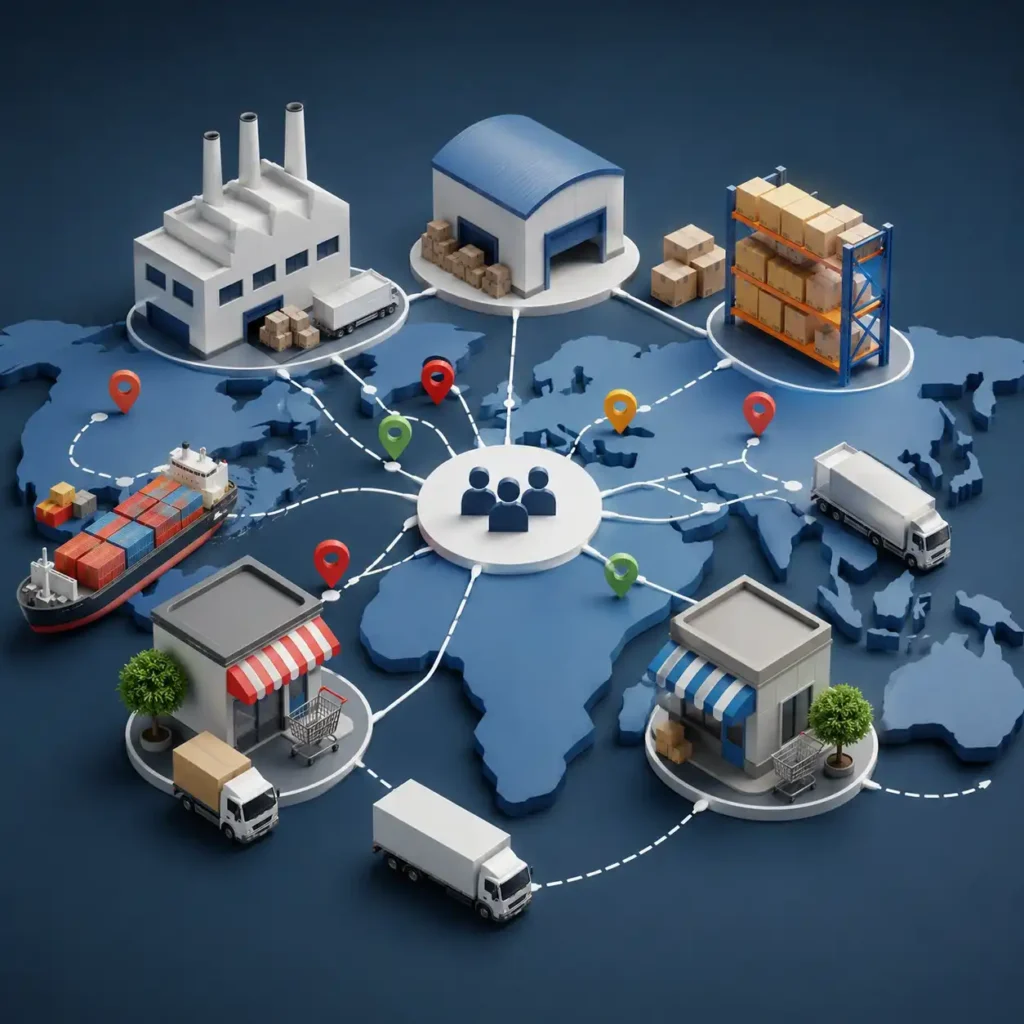
A distribution channel is the path a product or service takes from the producer to the end consumer. It includes every business, person, and process involved in moving goods along that journey — manufacturers, wholesalers, distributors, retailers, agents, and customers.
Distribution channels serve three core functions:

Physical movement
Transporting goods from where they’re made to where they’re needed

Information flow
Passing product details, pricing, and promotions down the chain
Financial flow
Transferring payments back up the chain to the producer
Without a well-designed distribution channel, even the best product can fail to reach its market. That’s why channel strategy is a central pillar of any marketing mix alongside product, price, and promotion.
The 4 Types of Distribution Channels
In a direct channel, the manufacturer sells directly to the end consumer with no intermediaries involved.

1. Direct Distribution Channel (Zero-Level Channel)
In a direct channel, the manufacturer sells directly to the end consumer with no intermediaries involved.
How it works: Producer → Consumer
Examples:
- A farmer selling vegetables at a local market
- A software company selling subscriptions on its own website
- A clothing brand running its own e-commerce store
- A manufacturer operating branded retail stores (like Apple Stores)
Advantages:
- Full control over pricing, branding, and customer experience
- Higher profit margins — no intermediary taking a cut
- Direct access to customer data and feedback
- Faster response to market changes
Disadvantages:
- Higher upfront investment in sales and distribution infrastructure
- Limited geographic reach without significant scaling
- The business must handle all logistics, customer service, and returns
Best for: High-margin products, luxury goods, digital products, businesses with strong brand recognition, and D2C (direct-to-consumer) brands.

2. Indirect Distribution Channel
In an indirect channel, one or more intermediaries sit between the manufacturer and the end consumer. These intermediaries — wholesalers, distributors, agents, and retailers — take on part of the distribution work in exchange for a margin.
Indirect channels break down into three levels:
One-Level Channel (Short Channel)
One intermediary — a retailer — connects the manufacturer to the buyer. Common in consumer electronics, automotive, and fashion.
Example:
A smartphone brand selling through Best Buy or Carrefour.

Two-Level Channel
How it works: Producer → Retailer → Consumer
Two intermediaries handle distribution. The wholesaler buys in bulk from the manufacturer, breaks it into smaller quantities, and sells to retailers. This is the classic model for food and beverage, pharmaceuticals, and household goods.
Example:
A beverage brand selling to a national distributor, who sells to supermarkets, who sell to customers.

Three-Level Channel (Long Channel)
An agent or broker is added — common in international trade or industries where manufacturers don’t have direct relationships with wholesalers.
Example:
An agricultural exporter using a trade agent to access foreign wholesale markets.

Advantages of Indirect Channels:
- Rapid market penetration without heavy infrastructure investment
- Access to established retailer and wholesaler networks
- Intermediaries handle local market knowledge, storage, and last-mile delivery
Disadvantages:
- Lower profit margins — each intermediary takes a cut
- Less control over how the product is presented or priced at point of sale
- Slower feedback loop from customer to producer

3. Dual Distribution Channel
Some businesses use both direct and indirect channels simultaneously — this is called a dual distribution or multi-channel strategy.
Example:
A sports equipment brand selling through its own website (direct) and also stocking products in Decathlon or Sports Authority (indirect).
This approach maximizes reach but requires careful channel conflict management to avoid undercutting your own retail partners on price.

4. Reverse Distribution Channel
This channel moves goods backwards — from the consumer back to the manufacturer or recycler. It’s used for returns, recycling, and product refurbishment.
Example:
- Electronics take-back programs (Apple, Samsung)
- Reusable packaging returns (glass bottles in the beverage industry)
- Warranty repair and refurbishment pipelines
With sustainability becoming a business priority, reverse distribution channels are growing in strategic importance.
Distribution Channel Strategies
Choosing a channel type is just the start. You also need a strategy for how intensively and selectively you distribute. There are three main strategies:
Intensive Distribution
Goal: Maximum market coverage — get the product everywhere.
In intensive distribution, a business places its product in as many outlets as possible. Every supermarket, petrol station, convenience store, and vending machine is a potential channel.
Selective Distribution
Goal: Choose specific retailers or distributors that align with your brand and quality standards.
Rather than being everywhere, the company selects a curated set of outlets — typically those that meet criteria around customer service quality, store environment, and target demographics.
Exclusive Distribution
Goal: Grant one distributor or retailer sole rights in a specific territory.
Exclusive distribution creates scarcity and prestige. The manufacturer gives a single partner exclusive rights to sell the product in a region, typically in exchange for sales targets and brand commitments.
Best for: Luxury goods, high-end automotive, specialist industrial equipment, premium spirits and wines
Real-world example:
- Ferrari authorizes only a handful of dealerships per country
- Rolex sells only through approved authorized dealers
- High-end fashion houses distribute exclusively through flagship stores and selected luxury retailers
Key challenge: You’re dependent on a single partner per territory. If they underperform, your market presence suffers.
Omnichannel vs. Multichannel Distribution
Two terms that often get confused:
✓ Omnichannel distribution — Means all channels are integrated into a seamless customer experience. Inventory, customer data, and order management are unified across online, in-store, mobile, and third-party platforms.
Distribution Channels vs. Supply Chain: What's the Difference?
These terms are related but not the same.
The supply chain covers everything from raw material sourcing through manufacturing to delivering the finished product. It includes procurement, production, warehousing, and outbound logistics.
Distribution channels specifically refer to the downstream path — how the finished product moves from the manufacturer to the end consumer. Distribution channels are a subset of the broader supply chain.
Think of it this way: the supply chain builds and moves the product; the distribution channel determines who sells it and how it reaches the buyer.
How Distribution Channels Impact Warehouse and Logistics Operations
Your choice of distribution channel directly shapes your warehousing requirements, inventory strategy, and logistics setup.
Short Channels and Logistics
When you sell direct or through a single retail layer, inventory moves quickly from manufacturer to end user. This typically means:
- Lower average inventory levels
- Faster stock turnover
- Simpler warehouse layouts optimized for fast pick-and-pack operations
- Greater emphasis on last-mile delivery speed
D2C brands often run leaner warehouses with high-frequency, small-parcel outbound shipping.
Long Channels and Logistics
When multiple intermediaries are involved, goods may sit in warehouses at each level of the chain. This requires:
- Higher inventory buffers at each stage
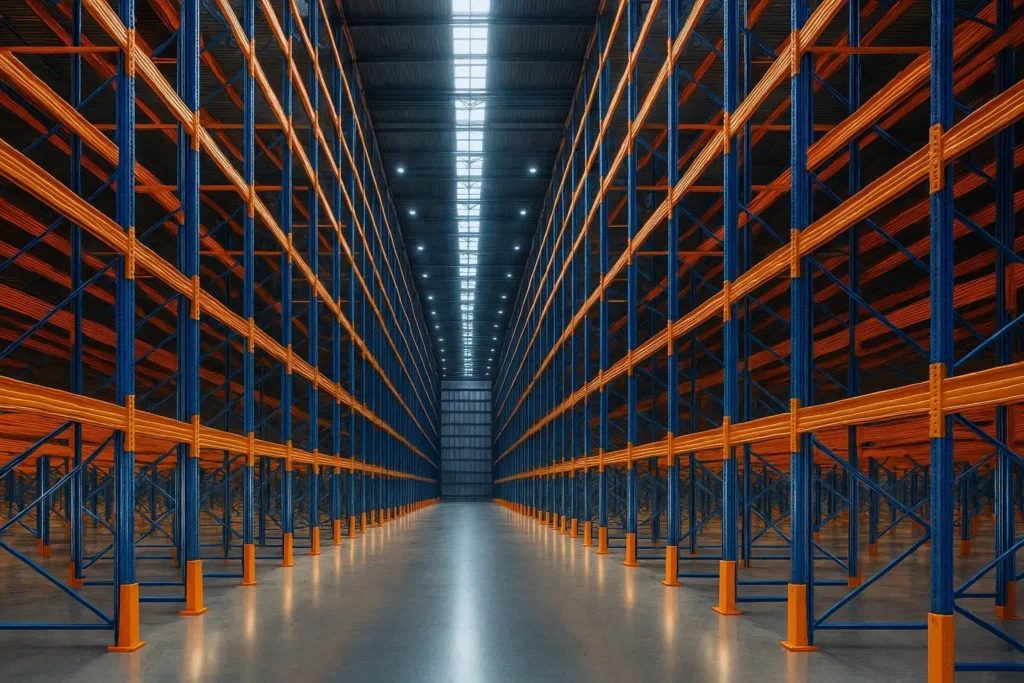
- Larger warehouse footprints for bulk storage
- Strong inventory tracking across multiple nodes
- Palletized bulk shipping between stages, with carton-level picking for retailer replenishment
Technology and Visibility
Regardless of channel length, real-time inventory visibility is non-negotiable. Without it, stockouts and overstock situations multiply across the chain.
Modern Warehouse Management Systems (WMS) give businesses the ability to track goods at every stage, automate replenishment, and synchronize inventory data across channels. For omnichannel operations, a WMS integrated with order management and e-commerce platforms is essential to avoid overselling and fulfillment errors.
Automation is increasingly deployed in high-volume distribution — from conveyor systems and automated storage and retrieval (AS/RS) to robotic picking — to handle the speed and scale demands of modern distribution.
How to Choose the Right Distribution Channel
There’s no universal answer. The right distribution channel depends on several factors:
01
Product Type
- Perishable goods need short, fast channels
- High-value or technical products often benefit from selective or exclusive distribution with trained sales staff
- Commodity products usually suit intensive distribution
02
Target Market
- Who are your customers, and where do they shop?
- Are they online-first, or do they prefer in-store experiences?
- Are they geographically concentrated or spread across regions?
03
Margin and Price Point
- Low-margin products can’t support many intermediary layers — each level erodes profitability
- High-margin products can absorb channel costs while maintaining profitability
04
Control Requirements
- How much control do you need over pricing, presentation, and customer experience?
- Direct channels offer maximum control; long indirect channels offer the least
05
Competitive Landscape
- How do your competitors distribute? Are there underserved channels?
- In some categories, owning a unique channel creates durable competitive advantage
06
Resources and Scale
- Direct distribution requires significant infrastructure investment
- Indirect channels let you leverage existing intermediary networks for faster scale with lower capital outlay
Distribution Channel Examples by Industry
Industry
Common Channel Type
Strategy
FMCG / Food & Beverage
Two-level (manufacturer → distributor → retailer)
Intensive
Luxury Fashion
Direct + exclusive retail partners
Exclusive
Consumer Electronics
One-level (manufacturer → retailer) or direct online
Selective
Pharmaceuticals
Two-level via licensed distributors and pharmacies
Selective
SaaS / Software
Direct (online subscription)
Direct
Automotive
One-level via authorized dealerships
Exclusive/selective
Agricultural Products
Long channels via brokers and wholesalers
Intensive
Industrial Equipment
Direct or selective via specialist distributors
Selective/exclusive
Emerging Trends in Distribution Channels (2026)
✓ D2C is Mainstream — The direct-to-consumer model has matured. Brands that once relied purely on retail now sell directly through owned e-commerce, subscription models, and social commerce. This shift gives businesses richer customer data and higher margins.
✓ Social Commerce — Platforms like TikTok Shop, Instagram Shopping, and Pinterest have become distribution channels in their own right. Users discover and purchase without leaving the app — collapsing the traditional funnel.
Frequently Asked Questions About Distribution Channels
The two-level indirect channel — manufacturer to wholesaler to retailer to consumer — is the most widely used globally, particularly in FMCG, food and beverage, and consumer goods sectors.
A sales channel is specifically the method of selling (online store, retail shelf, sales rep). A distribution channel is broader — it includes the logistics and movement of goods as well as the selling function.
Yes. This is called a multi-channel or omnichannel strategy. Many successful businesses combine direct online sales with retail partnerships and marketplace listings. The key challenge is managing channel conflict and maintaining consistent pricing.
Channel conflict occurs when different members of the same distribution channel compete with each other — for example, a manufacturer selling direct online at a lower price than its retail partners charge in-store. It can damage partner relationships and destabilize pricing strategy.
Every intermediary in a distribution channel adds a margin to cover their costs and profit. A product that leaves the factory at $10 may retail for $25–$30 after wholesaler and retailer margins are applied. Longer channels generally mean higher retail prices or lower manufacturer margins.
A zero-level channel is another name for a direct channel — zero intermediaries between the producer and the consumer.
Conclusion
Distribution channels are not a back-office detail — they are a strategic decision that shapes everything from your profit margins to your customer relationships to your warehouse operations.Getting your product made is only half the battle.
The businesses that win aren’t always the ones with the best product. They’re the ones that get their product in front of the right customer, through the right channel, at the right time. A brilliant product buried in the wrong distribution structure will consistently lose to a decent product with a smart channel strategy.
There is no one-size-fits-all answer. A luxury watch brand and a bottled water company both need distribution — but their optimal channels look nothing alike. The right choice comes down to understanding your product, your customer, your margins, and your capacity to execute.
What’s clear in 2026 is that the rules are changing faster than ever. Direct-to-consumer has gone mainstream. Social platforms have become storefronts. Consumers expect seamless omnichannel experiences as a baseline, not a bonus. Businesses that treat their distribution channel as a fixed, legacy decision will find themselves outmaneuvered by those who treat it as a live competitive lever.
Review your channels regularly. Challenge your assumptions. And remember — how you distribute is just as important as what you distribute.